

How to Get Your Website To Show Up AI Searches
If you’ve searched something on Google lately and gotten a full answer before you even clicked a link, you’ve already experience AEO.
AEO stands for Answer Engine Optimization. It’s what allows AI tools like ChatGPT, Claude, and Gemini to read, trust, and directly quote your website in their answers.
For years, every business owner has been focused on SEO and ranking on Google. Now, we want to also consider how to get quoted and cited by AI.
As both a dietitian and a website designer, I wanted to walk through exactly what I changed on my own blog and how this can help you grow as a private practice owner.
Quick Answer: How to show up in AI search results?
AEO is about making your content easy for AI tools to extract and use as a direct answer. Instead of writing a blog post that slowly builds to a point, AEO asks you to answer the question clearly, in a way AI (and a busy reader) can find in seconds.
What changes should I make to my blogs to help them show up in AI search engines?
Turn subheadings into questions
I rewrote my H2 subheadings as actual questions, the way someone would type them into a search bar or ask an AI assistant. Instead of a header like “My Approach,” I use something like “What does a weight-inclusive approach to nutrition look like?”
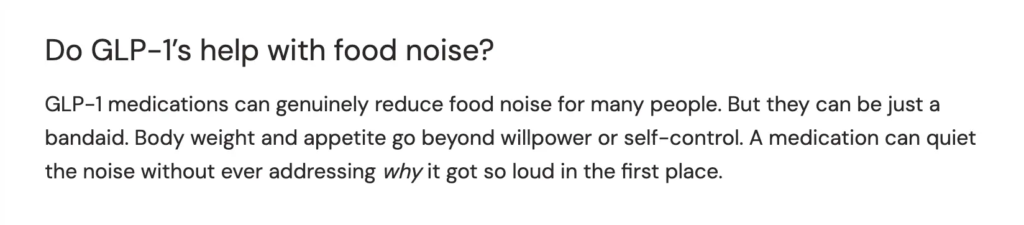
Direct answer blocks
Right after each question header, I added a short, clear answer before going deeper into the explanation. AI tools tend to pull from that first clear chunk of text, so it needs to say the real thing plainly.
Add FAQs to the bottom of all my blogs
FAQ sections are in a clear, scannable format using question and answer blocks. This is the same logic behind the first two tips I talked about above. This format is easy to scan and extract information from. FAQs also give you the opportunity to ask similar questions, which could help you show up in more search results.
Incorporate bullet points and tables
Again, AI loves information that is clear and structured. Bullet points and tables cut out the extra fluff in sentences, making it easy to scan. This format is also easy to read by humans, which keeps people on your blog longer, signaling to search engines that a lot of people engage with this type of content.
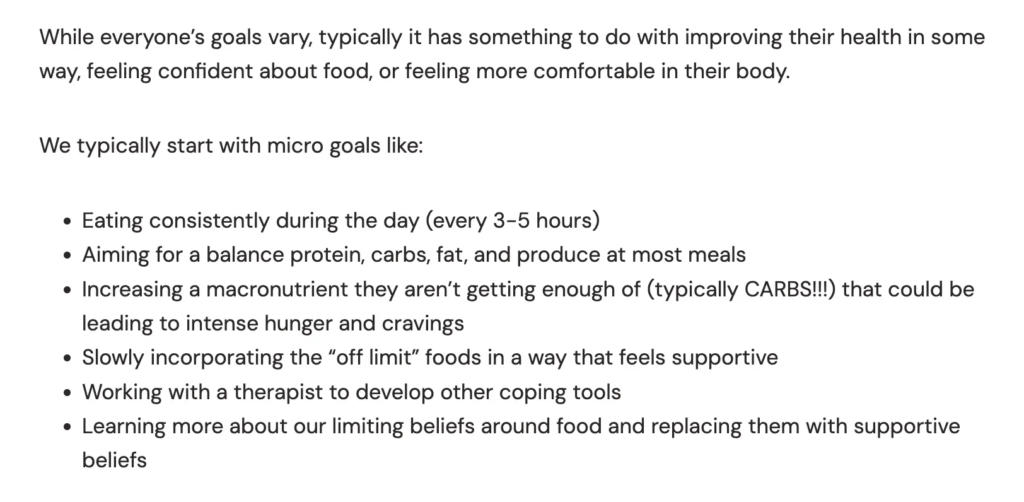
What this means for you
None of this requires a full site rebuild. It’s mostly a matter of going back through your existing blog posts and:
- Turning your subheadings into real questions your ideal client is already asking
- Adding a clear, direct answer right under each one
- Adding an FAQ section to the bottom of your blog posts
- Using bullet points and tables to keep information clear and scannable
If your content already speaks to your ideal client, its just about optimizing it structurally to be found.
Frequently Asked Questions
Want to develop an SEO and AEO strategy that brings in your ideal client?
If you are finally ready to tackle building/updating your website off your never-ending to-do list, I am here to support you!